Monday, August 28, 2006

EV future

Recently a couple of good news on electric vehicles have caught the attention of many people. However, the best bits are not readily aparent. Let’s clarify:

Tesla
The new
Tesla vehicle got everyone excited. The idea of buying an electric car with high performance, a proper sports car, is interesting for many reasons. But the hidden joy is in the people that are backing up the project: guys from the “new economy” like Google’s Larry Page and Sergey Brin and other entrepeneurs from Silicon Valley. Will the “new money” rescue the auto industry of the future? If one thinks about the major developments needed for the massification of EVs (batteries and their electronic control) one can see where theese developments will be accomplished. And, just as happened with all of the major computer and electronic developments, we can guess what will happen with the price of these new technologies…

EV Smart
More good EV news. Smart will operate a fleet of EV Fortwo vehicles in London. The powertrain technology was developed by the company Zytek and the most evident joy is in the backup and interest by Daimler-Chrysler in this vehicle. However, the hidden joy is really in the prospect of an alternative form of transportation in big cities. The concept of “personal transportation” where one uses small 2-seat vehicles is interesting for the use of electric propulsion because these cars are very light and thus suitable for EV massification. Fingers crossed for the success of the EV Smart, and the interest of other manufacturers in the concept of “personal transportation”. How nice would it be if Toyota would materialize the
PM concept.

Encouraging inside information
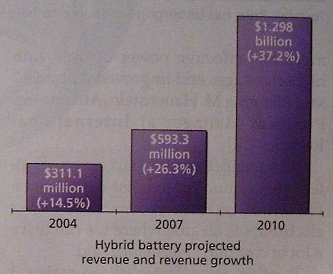
The previous paragraphs were “old news” actually, except for the clarification of the hidden benefits. The really good news is that, according to a document from consulting company Frost & Sullivan, there is a projected increase of revenue from batteries manufacturers of 26.3 % for 2007 and a further 37.2% until 2010. These numbers are based on contracts for the next 3-4 years, so they are a reliable indication of expected growth in this business. But note that these are referred to hybrids, not EVs. However, the prospects of such development in this industry means that prices for batteries and control electronics will be lower and research in new developments will greatly increase.
.

Wednesday, August 23, 2006

2008 Opel Vectra

Another Opel Vectra CGI has surfaced, this time as a Vauxhal model. Are you wondering what a Vauxhal is? Nevermind, it's irrelevant, I'm not even sure I spelled it properly... The Opel Vectra is not highly awaited because the current one is not very popular. However the bright side is that it can improve a lot considering how poor the current design is. The CGI is not bad, but the idea is that it might look a bit like a 4-door coupe, the new craze of the industry. Unfortunately the car will not make use of the new Holden Commodore platform, hopefully the new RWD for the masses platform, at least in the USA. The European Opel model will use much cheaper and generic FWD underpinnings, so better luck next time.
.

Wednesday, August 16, 2006

Opinion: Jaguar selling options

This is one of the hot subjects in the automotive industry. It has been said several times that Ford is interested in selling Jaguar. And it was referred previously the interest of Renault in buying the British luxury brand. That would be a much more interesting move by Renault than engaging in an alliance with General Motors… Lately it was rumoured that Ford might also sell Land-Rover together with Jaguar in order to make the deal more appealing. This would not be a good business move by Ford but then, more important things are worrying Ford managers these days.

A different alternative…
First let’s consider the problem with Jaguar: the brand needs a lot of investment in new models, new platforms, new marketing, closing of factories, etc. And Ford is not in a position to make the strong investment needed. This has been made clear by the strange absence of prototypes of the next S-type out in the open. Jaguar is taking too much time to replace this model and also no clear perspectives of the X-type substitute are known. Remember, Jaguar is a proper luxury brand: it needs to have the best architecture available and that means a longitudinal engine placement and rear-wheel drive. And of course, top engines, gadgets, materials, technology, safety, etc. And all of these things (and particularly the superior RWD platforms) are very expensive to develop.

The alternative route that auto-future humbly proposes is the partnership with another manufacturer. Not a selling business, but a cooperation with profit sharing but crucially, sharing of development costs. Eventually with a future-sell option. It has been said before that PSA should make a very strong effort to buy Jaguar (check the previous article on Renault and Infiniti). The alternative proposed here is the joint development and management of the Jaguar brand by Ford and PSA. Just like these two companies already operate with diesel engines.

It is important to note that these two companies are well known for successful partnership relations. PSA already joined efforts with: Renault, for V6 engines; Fiat for MPV’s; Toyota for the infamuous triplets (C1, 107, Aygo); Mitsubishi for the next SUV; BMW for the future 1.6 engines and of course Ford for the current diesel range. Ford of Europe also had its share of successful partnerships: VW for the Sharambralaxy model; Nissan for a SUV model; Fiat for the next Ka replacement as well as the referred diesel deal with PSA.

However, this is an entirely different proposition. Jointly running a brand is very different from jointly developing engines or a model. The benefits for both Ford and PSA must be clear as well as their role in the whole process. The benefits of jointly developing a familiy of state-of-the-art RWD platforms are evident for Ford, since these could be used by several other brands of Ford. But also PSA could make good use for these as well as bigger engines in future replacements of the 407 and 608 models or make something like the 908 concept possible. But most of all, spliting the sky-high development costs by half is a critical advantage for both companies.

Having said this, one thing should be made clear. The PSA liasion is interesting because PSA needs a prestige brand in its portfolio. And Ford can’t afford to invest heavily in Jaguar. But the Renault alternative is more rational because the Nissan-Renault alliance already has the goods in the shape of the credible RWD platforms from Infiniti. Renault will not need to invest so heavily. I care alot about PSA, maybe this is why this romantic alternative is suggested.

The one thing that really needs to be properly accomplished…
Design! Cars in the luxury class need the right technology with the right design. And this needs to work whether it will be done by Ford, Renault, PSA or any other company. And in Jaguar’s case this means that the current trend was wrong. The X-type and XJ failed because these models are too classic. Jaguar needs a thing called retro-avantgarde design. Modern design with retro influences. This looks difficult to accomplish but look at the good examples: Chevrolet Camaro concept; Aston Martin range; Ford Mustang… just get the right designer.
.
Nice... but not good enough!

Tuesday, August 08, 2006

2008 Peugeot 308 SW

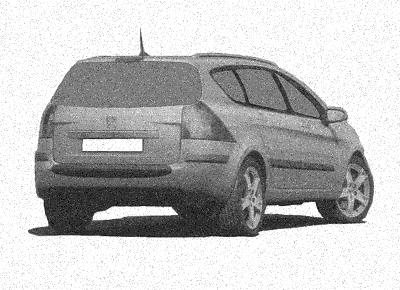
The illustration presented is not new but it is interesting because some features make it very reliable. It refers to the station version of the next Peugeot 308. The interested reader can look back at Peugeot 308 articles for reference (predictions, analysis, will it fail?). Some recent inside information has drawn attention to this image because it is rumored that the 308 SW will not follow the rear-lights and C-pillar arrangement of the 407 SW, unlike the 207 SW that will be very similar. Also recent spy pics from of the 308 5-door prototype Lehman have shown a C-pillar design similar to the one found on this image. Interestingly those spy-pics are more recent than the picture presented below. Furthermore, inside information from a PSA supplier states that the 308 will be presented and begin its career still in 2007 with the SW version following later, in 2008. Some of the parts for this new model are already being manufactured in small trial series.

It is not yet sure if the 308 SW will be available with 7-seats as the current model. Since the 3008, a small people-carrier, is also being developed it is not clear if the 7-seat availability will disappear from the 308 SW. But it would be a good move if Peugeot could upgrade the design of this model to a more emotional shape while maintaining 7-seats. This would be a nice alternative to small people-carriers, with more car-like design, lower centre of gravity and enhanced driving dynamics. These have been strong selling points of the current 307 SW: a car that can seat 7, or have a very big luggage space, but still drives like a proper car, better yet, like a Peugeot!
.

Wednesday, August 02, 2006

2009 VW Touran

Pictured below is a possible interpretation of the VW Touran replacement. The current VW Touran is a successful vehicle despite its boxy and generic design. One of the most expected improvements consists precisely in adopting a more car-like design, as opposed to the current van-like esthetics. Other expected improvements are concerned to interiors: the current version is very poor in design and perceived quality. So much that some people believe the Touran is based in some VW commercial vehicle such as the Transporter. But the Touran is a proper car, based on the PQ35 platform. This is expected to remain largely unchanged as with the future Golf VI: only refinements with minimal platform changes.

One of the interesting bits of the 2009 Touran is concerned with how much VW will evolve the design. It is believed that the Touran will adopt a new trend of making people-carriers closer to sporty stations. Think of it as Merc R-class spreading its influence to cheaper cars… but also the following of the current Ford S-max that is clearly oriented towards “active lifestyle” as opposed to the Ford Galaxy with people-carrier design. Other interesting arrivals in this type of vehicles are the Peugeot 308 SW (a possible 7-seater station that sort of merges with the people-carrier crowd) and the Corolla Verso successor.
.

Thursday, July 27, 2006

The new compact: Ford Focus outsells VW Golf in Europe

The new compact

This is a wrap-up of previous blog entries regarding the Ford Focus. The Focus II is (IMO) a rather dull car. Why is something with such a boring design referred as “the new compact”? Honestly, I find it difficult to explain. But fact is, the Focus II is the most important representative of the most recent trends in the compact segment. Because of several of its features but mainly because it is the best-selling compact in Europe since the beginning of this year (actually since the final months of 2005). And this is a major point. For many many years the VW Golf was the best selling compact in Europe. This helped establish the Golf as the reference model, the default choice in this segment, a benchmark. If not for its attributes, the single fact that it was the best selling compact made it the first choice for many people. And was enough to make this class of cars be referred by many as “the Golf segment”.Not anymore. The Focus is now the best-selling compact in Europe. It is the new benchmark, the reference of the compact class. The new king. The new compact. And the commercial performance of the Focus is even more impressive because for once it has a very boring design (and we Europeans are supposed to not like boring designs) and also because Ford is an American brand. Well, in reality Ford Europe is completely different from Ford America or Ford down-under. But still, it’s an American brand. This means that the Focus can never make it to top spot of sales in Germany or France, the biggest European markets. In Germany the Golf will always be the leader, and in France it will always be a Renault or Peugeot in the top of sales charts. Thus the Focus must perform really well in the rest of the European markets. And it must have a very impressive set of features to overcome its design. It’s really hard to explain how such a dull design can do so well in Europe…Auto-Future looks closely at the new compact. The most important trends and features in this class and why the Focus II is the new reference, the new leader, the new benchmark, the new compact
.
.

The new compact is big

For a 4342mm length the Focus II has a massive 2640mm wheelbase (only 8mm shorter than a Audi A4) and a huge 1840mm width. This means loads of space both for occupants and luggage. So big is the new compact that one does not have much advantage in space in a Mondeo over a Focus SW or a Focus C-máx. This is in itself a recent trend that has helped conventional 4-door sedans to loose a lot of sales for these models. Incidentally, the compact segment also lost appeal for consumers that don’t need much space: today, cars like the Peugeot 207 or Fiat Grande-Punto can fill the space needs for many consumers as these are about the same size as a Golf III.
The massive size of modern “compacts” is in the origin of another trend: future versions of these cars will not grow much more in size. And will not change a lot in their underpinnings. So expect mainly design and interior improvements for the Focus III and Golf VI. On the other hand, the current Opel Astra will have to be greatly improved for the next generation, not only in size and space but mainly in suspension design… But the current Astra is what might be called in this context “old compact”.


The new compact is sophisticated

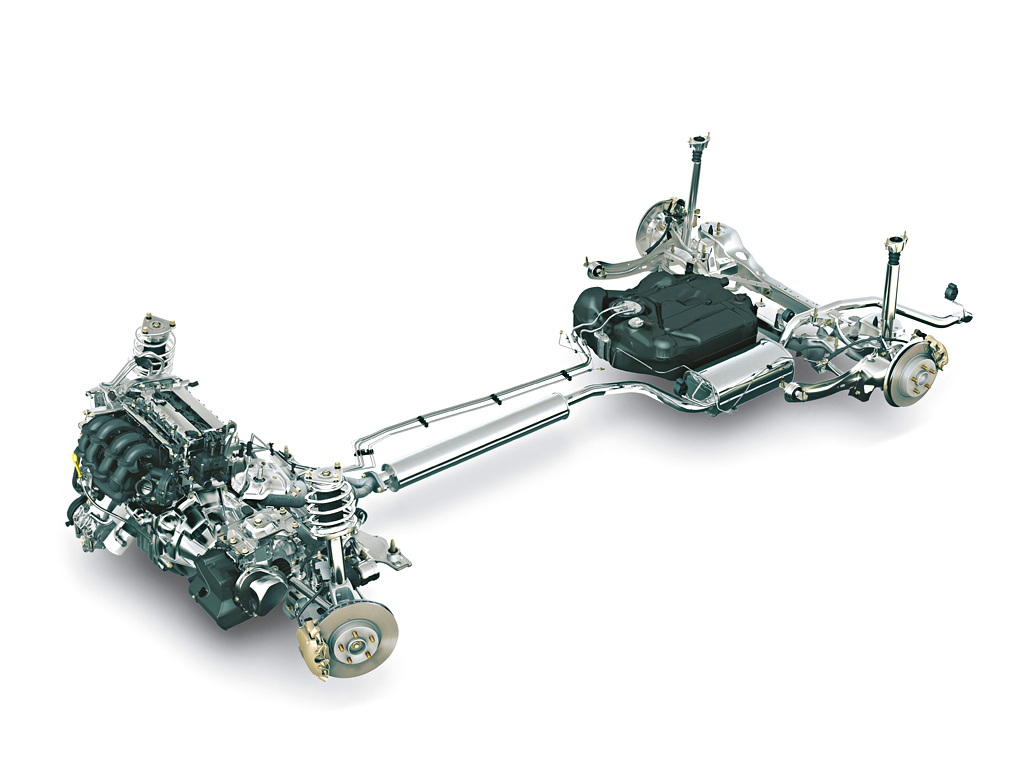
Both in electronics and equipments but mainly in chassis and suspension design. The new compact (as pioneered by the Focus I but followed by the VW Golf V) has very sophisticated multilink rear suspension design. But also very high body stiffness. The most advanced representatives of this class (Focus II and Golf V) are in reality smaller versions of their bigger brothers (next Mondeo and current Passat) sharing most of the suspension parts and underpinnings. This level of engineering means that the new compact drives exceptionally well combining great levels of comfort, handling and safety. In this particular the Focus II is clearly superior to the VW Golf, mainly due to its bigger footprint (wheelbase x width) and Ford’s extensive experience with multilink suspension design. It is really impressive how the Focus can still be very comfortable with 17’’ wheels while displaying amazing handling, safety and agility.This level of sophistication will be followed by other competitors, although it is not clear if the French machinery will upgrade to multilink suspensions: current versions of the Peugeot 307 and Renault Mégane are still very competitive in handling and comfort even if using old suspension design… On the other hand the current Opel Astra will have to upgrade a lot. Actually, if the Opel Signum could be made a bit smaller (and cheaper) maybe then it could compete with the Focus II…


The new compact is mainstream

Although big and sophisticated the new compact is good value. And the leaders in this segment have realized that it is not worth trying to sell these cars as premium. For that purpose there is the Volvo S40 and C30 (in the Focus family) and the Audi A3 (in the Golf family). And of course the more informed and cash-filled buyers will wisely spend their money in the BMW 1-series and Mercedes sportcoupe that really have a superior RWD architecture. In this particular the Focus II excels since it has very competitive pricing. But the Golf V rapidly lowered the usual VW prices and now fights head to head with the rest of the mainstream players. The “back to mainstream” route will be further accelerated with the next Golf VI.

However, this move to maistream does not mean that manufacturers won't try to be more profitable in this segment. The future trend is to keep basic hatchback versions very competitive in price and use the niche versions (CC, small SUV, sporty coupé) to move up in the price scale.

The future of the new compact

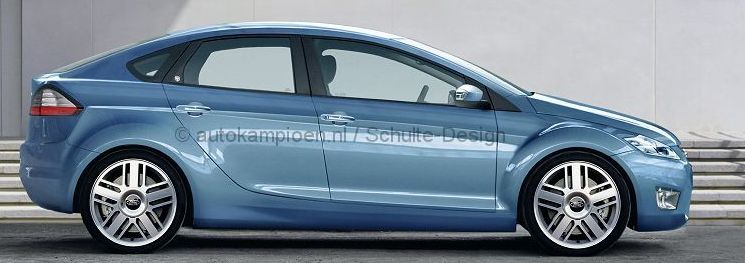
One blog entry is missing here: the one entitled “the new compact is dull”. Fortunately the future of this class of cars will see more emotional designs. Next generation of the Ford Focus will follow the “kinetic” theme established by the new Ford S-máx. The CGI presented below (by Schulte) is obviously based on the Iosis concept (as every future Ford CGI these days). Even if it will not look like that it will have much more emotional appeal than the current vehicle. Let’s face it the current (European) version is so dull that it can only improve!Same thing for the Golf. The next iteration will have a much fresher look. The current Golf V is also a bit boring which explains part of its failure. However, although loosing the top spot in sales, one should not think of the Golf as the looser in this context. If you read carefully what was written in this blog about the new compact you will see that the Golf is as trend setting as the Focus. And in the future it will have very good chances of fighting the Focus, mainly in the more profitable niche versions. The next Golf SUV and Focus-derived CUV will be leveled, but the VW Eos will have much more success than the Focus CC (what an ugly thing!) and the Golf coupe version (Scirocco) will be a future icon while for now no Focus equivalent is expected.

Monday, July 24, 2006

update: 2010 VW Station

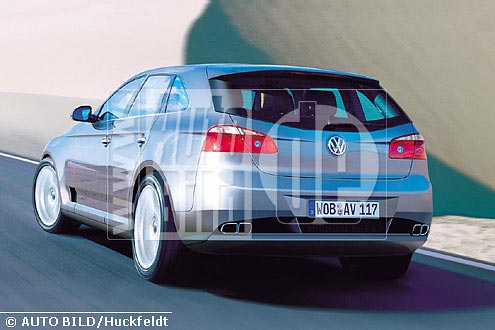
A new CGI by Auto-Bild. Looking very good, much more upscale than AMS interpretation. And hopefully a more reliable interpretation.
.

Friday, July 21, 2006

2008 Ford Ka

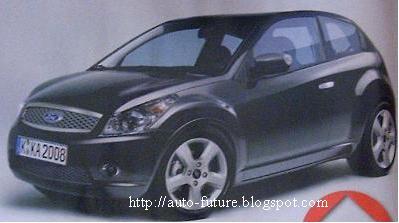
Pictured below is a computer illustration of the next Ford Ka. This interpretation is particularly good-looking. So much that it looks too good to be true!… This design suits very well the consumer tastes in this class of vehicles: small and funny, but personalized. The 2008 Ford Ka will make use of a platform sharing agreement between Ford and Fiat that will see this car and the Fiat 500 share most of the underpinnings. Most of the engines are Fiat-sourced benefiting from a rather good expertise of the Italian house in small engines. But it is rumored that the two companies are developing a 900cc 3-cylinder engine for the base version. To be confirmed!

This seems like a good cooperation for Ford Europe that already has an excellent partnership with another European company (PSA) for diesel engines. Maybe this kind of partnerships is preferable to big merge operations and alliances…

The new Ka will arrive a bit late in a market that is witnessing a revival of very small cars. A few years ago VW was thinking of not replacing the Lupo. Renault was allowing the Twingo a slow death after many years without significant restylings. Suddenly all changes: VW ships the Fox from Brazil, Renault changes the Twingo project for very low costs and creates the Dacia brand, PSA and Toyota team-up for the infamous triplets (Aygo, C1, 107), Fiat goes retro-cheap with the next 500 and Ford joins it for the Ka replacement. Why oh why this small car revival?

The answer is: Chinese cars. Not now, but in a close future. Chinese manufacturers will arrive in Europe with their big SUV’s at VW Golf prices, big saloons at Citroen C4 prices, hatchbacks at Renault Clio prices… and they will fail miserably. Because this is Europe, it doesn’t work that way! However, they will also bring smaller cars at really small prices. And this is the segment where they can have success. The low-cost cars, for cities and short-distance trips, in the context of higher oil prices and congested traffic. But the European manufacturers (and Toyota and Ford) are wisely preparing a “friendly” reception party for the Chinese manufacturers, hence this revival of very small and cheap cars.
.

Tuesday, July 18, 2006

VW station (R-class for the volks)

One of the good reasons to spend great amounts of cash in such machinery as a Mercedes R-class (besides the superior levels of engineering, quality, reliability, etc.) is that you know that you will have an exclusive vehicle for some time. It's one of the good things of buying from market leaders like Mercedes, you know others will follow...

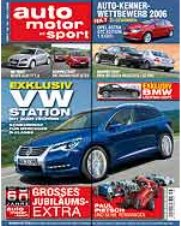
One of the followers is previewed by Auto Motor und Sport in this month's issue. For around 2009 the less afortunate can buy a R-class wannabe from Volkswagen. It promises a lot of space and none of the engineering, quality, reliability, etc. of the Mercedes. But it will be cheaper, of course.

The VW station is expected to use modular elements from Audi platforms. In the program V8 engines exist, which means a longitudinal position and torsen AWD. Not bad at all! Also V6 and 4-cylinder engines will be found and also in diesel versions. Diesel 4-cylinders will be of the common-rail type and the cheaper versions are rumoured to use FWD.
.

Monday, July 17, 2006

Huckfeldt: your reliable source for future vehicle design

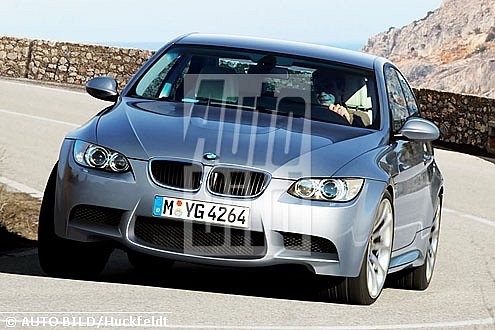
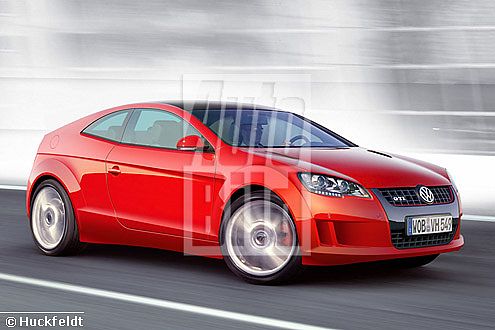
Huckfeldt is the most reliable source for getting information on how vehicles will look with one to two years in advance, in particular German cars. You can see in this page a comparative example of his art. Several of his photoshops can be seen in this link, frequently with a comparison with final real-life pictures. Usually the coincidence is remarkable, sometimes with more than two years of difference. How can he do it? He needs remarkable skills of “photoshopping” but also insider sources of information that can go beyond the general shape of the car, or family appearance and get down to detailing. That is why his photoshops are spot on and Autobild is frequently very accurate in technical details of future vehicles.

Seen below is a CGI of the next BMW M3, originally presented in 2005. And next to it, one of the most recent spy shots with just minimal disguise. Can you see the correlation? There is a word for this: reliability.
.


Friday, July 14, 2006

The new compact: future trends

The future of the new compact
One blog entry is missing here: the one entitled “the new compact is dull”. Fortunately the future of this class of cars will see more emotional designs. Next generation of the Ford Focus will follow the “kinetic” theme established by the new Ford S-máx. The CGI presented below (by Schulte, see more from his work
here) is obviously based on the Iosis concept (as every future Ford CGI these days). Even if it will not look like that it will have much more emotional appeal than the current vehicle. Let’s face it the current (European) version is so dull that it can only improve!

Same thing for the Golf. The next iteration will have a much fresher look. The current Golf V is also a bit boring which explains part of its failure. However, although loosing the top spot in sales, one should not think of the Golf as the looser in this context. If you read carefully what was written in this blog about the new compact you will see that the Golf is as trend setting as the Focus. And in the future it will have very good chances of fighting the Focus, mainly in the more profitable niche versions. The next Golf SUV and Focus-derived CUV will be leveled, but the VW Eos will have much more success than the Focus CC (what an ugly thing!) and the Golf coupe version (Scirocco) will be a future icon while for now no Focus equivalent is expected.
.


update: 2007 Renault Laguna III

A recent spy-shot was presented by Auto-express. Renault's new style will translate, hopefully, into more than new white-camouflage. The white-thing that you see in the photo already shows some differences to the previous Auto-plus photoshop, just check the door-handles. Let's hope this is not one of those cases where encouraging CGI transform into boring vehicles...
.


Thursday, July 13, 2006

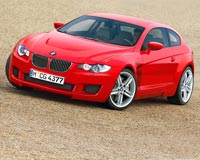
2009 BMW coupe (2-series, Z2?)

If the previous blog entry was about the VW Scirocco, the coupe for the people, here you find a CGI (also from Autozeitung) of the next BMW 1-series coupe (or 2-series, or maybe Z2) - the small coupe for the real driving enthusiasts and conaisseurs. Don't judge the CGI too harshly, Autozeitung does not have a very good record of reliable interpretations.
.

VW Scirocco update

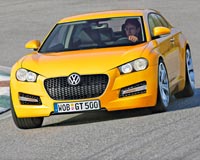
Autozeitung presented a CGI of the 2008 VW Scirocco. Their interpretation is closely based on the VW eco-racer concept. Still, the Auto-Bild interpretation remains as more reliable. And soon we should have more news on the final design since it's about time for the design to be frozen.
.
Check previous stories on this model here and here. The next Scirocco fits in a market trend where mainstream manufacturers squeeze more profit by launching niche versions of their bread and butter models. VW is particularly good at this exercise by separating this derivatives in designation, design and image. The 2008 Scirocco will get, for sure, a boost from the image connection to the original model.
.

The new compact...price matters

The new compact is mainstream
Although big and sophisticated the new compact is good value. And the leaders in this segment have realized that it is not worth trying to sell these cars as premium. For that purpose there is the Volvo S40 and C30 (in the Focus family) and the Audi A3 (in the Golf family). And of course the more informed and cash-filled buyers will wisely spend their money in the BMW 1-series and Mercedes sportcoupe that really have a superior RWD architecture. In this particular the Focus II excels since it has very competitive pricing. But the Golf V rapidly lowered the usual VW prices and now fights head to head with the rest of the mainstream players. The “back to mainstream” route will be further accelerated with the next Golf VI.
.
However, this move to maistream does not mean that manufacturers won't try to be more profitable in this segment. The future trend is to keep basic hatchback versions very competitive in price and use the niche versions (CC, small SUV, sporty coupé) to move up in the price scale.
.

Tuesday, July 11, 2006

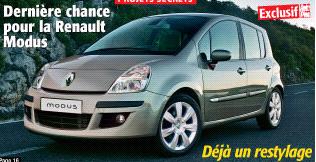
Renault Modus: restyling

This week's issue of Auto-Plus magazine shows a CGI of the restyled version of the Renault Modus expected for late 2006/beginning 2007. The Modus is a commercial failure. But it is not alone... when small people carriers like the Renault Scénic started enjoying great success, European manufacturers went into a crazy passion for even smaller people carriers such as the Modus or the Opel Meriva. All of these cars failed essentially because such class of cars should not exist. Anyway, now these models slowly agonize between restylings and incentives.

The restyling of the Modus will only feature small modifications (to keep tooling costs low). You may notice that the magazine article is a bit bitter on the car. It's a funny thing, but although being a French magazine Auto-Plus hates French cars!
.

The new compact... technology matters

The new compact is sophisticated
Both in electronics and equipments but mainly in chassis and suspension design. The new compact (as pioneered by the Focus I but followed by the VW Golf V) has very sophisticated multilink rear suspension design. But also very high body stiffness. The most advanced representatives of this class (Focus II and Golf V) are in reality smaller versions of their bigger brothers (next Mondeo and current Passat) sharing most of the suspension parts and underpinnings. This level of engineering means that the new compact drives exceptionally well combining great levels of comfort, handling and safety. In this particular the Focus II is clearly superior to the VW Golf, mainly due to its bigger footprint (wheelbase x width) and Ford’s extensive experience with multilink suspension design. It is really impressive how the Focus can still be very comfortable with 17’’ wheels while displaying amazing handling, safety and agility.

This level of sophistication will be followed by other competitors, although it is not clear if the French machinery will upgrade to multilink suspensions: current versions of the Peugeot 307 and Renault Mégane are still very competitive in handling and comfort even if using old suspension design… On the other hand the current Opel Astra will have to upgrade a lot. Actually, if the Opel Signum could be made a bit smaller (and cheaper) maybe then it could compete with the Focus II…
.

Friday, July 07, 2006

The new compact... size matters

The new compact is big
For a 4342mm length the Focus II has a massive 2640mm wheelbase (only 8mm shorter than a Audi A4) and a huge 1840mm width. This means loads of space both for occupants and luggage. So big is the new compact that one does not have much advantage in space in a Mondeo over a Focus SW or a Focus C-máx. This is in itself a recent trend that has helped conventional 4-door sedans to loose a lot of sales for these models. Incidentally, the compact segment also lost appeal for consumers that don’t need much space: today, cars like the Peugeot 207 or Fiat Grande-Punto can fill the space needs for many consumers as these are about the same size as a Golf III.

The massive size of modern “compacts” is in the origin of another trend: future versions of these cars will not grow much more in size. And will not change a lot in their underpinnings. So expect mainly design and interior improvements for the Focus III and Golf VI. On the other hand, the current Opel Astra will have to be greatly improved for the next generation, not only in size and space but mainly in suspension design… But the current Astra is what might be called in this context “old compact”.

.

Wednesday, July 05, 2006

The new compact

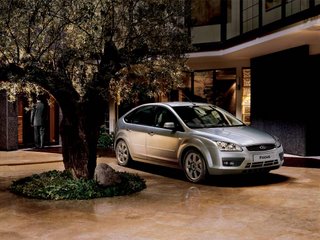
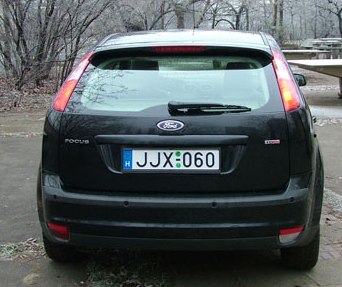
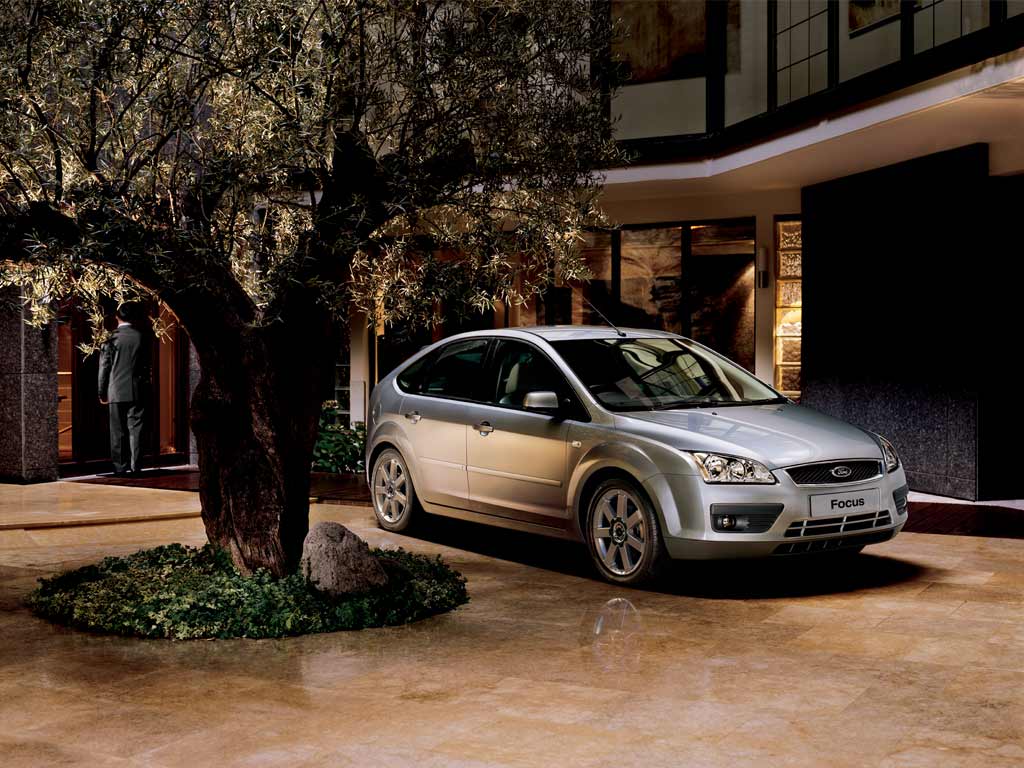
This report is illustrated below with the photo of a (IMO) rather dull car: the Ford Focus II. Why is something with such a boring design referred as “the new compact”? Honestly, I find it difficult to explain. But fact is, the Focus II is the most important representative of the most recent trends in the compact segment. Because of several of its features but mainly because it is the best-selling compact in Europe since the beginning of this year (actually since the final months of 2005). And this is a major point. For many many years the VW Golf was the best selling compact in Europe. This helped establish the Golf as the reference model, the default choice in this segment, a benchmark. If not for its attributes, the single fact that it was the best selling compact made it the first choice for many people. And was enough to make this class of cars be referred by many as “the Golf segment”.

Not anymore. The Focus is now the best-selling compact in Europe. It is the new benchmark, the reference of the compact class. The new king. The new compact. And the commercial performance of the Focus is even more impressive because for once it has a very boring design (and we Europeans are supposed to not like boring designs) and also because Ford is an American brand. Well, in reality Ford Europe is completely different from Ford America or Ford down-under. But still, it’s an American brand. This means that the Focus can never make it to top spot of sales in Germany or France, the biggest European markets. In Germany the Golf will always be the leader, and in France it will always be a Renault or Peugeot in the top of sales charts. Thus the Focus must perform really well in the rest of the European markets. And it must have a very impressive set of features to overcome its design. It’s really hard to explain how such a dull design can do so well in Europe…

In the next days Auto-Future will look closely at the new compact. The most important trends and features in this class and why the Focus II is the new reference, the new leader, the new benchmark, the new compact.
.

Monday, July 03, 2006

2008 Ford Falcon

Readers of auto-future already know about the upcoming Holden Commodore that will be unveiled this month. This will be a fantastic car and has been gathering a lot of interest, not only because of its features, but also because it will serve as basis for several GM models in the future. But what about its biggest competitor in Australia, the Ford Falcon? Well, so far almost nothing, no reliable CGI, no news of prototypes or even mules being tested. Ford is seriously late on the development of this car. And that means sales of the Falcon will suffer a lot. However, recently a news article from CarPoint reports that the 2008 Falcon's design will draw inspiration from the Iosis concept. How predictable that is… the Iosis is now believed to serve as inspiration for every new car from Ford so expect some Iosis-based photoshop of the new Falcon in the next months. But until the new Falcon arrives the Holden Commodore will be causing a lot of damage…